The Future of Space Tourism: Turning Science Fiction into Reality
Space tourism, once a concept reserved for science fiction films, is rapidly becoming a reality. Leading technology companies and entrepreneurs are making significant investments to make space travel accessible to civilians. In this article, we will explore the future of space tourism, its potential developments, and the exciting innovations on the horizon.
1. The Current State of Space Tourism
Space tourism has historically been limited to high-cost, exclusive opportunities. However, recent advancements and initiatives have marked notable progress:
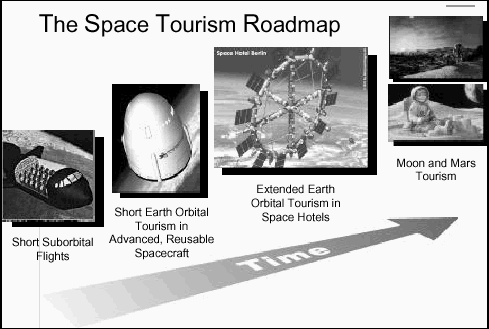
Suborbital Flights: Companies like Virgin Galactic and Blue Origin are focusing on suborbital flights, offering tourists a few minutes of weightlessness. These flights provide a brief glimpse of space and are considered an initial step towards broader space tourism.
International Space Station (ISS) Visits: SpaceX is now conducting commercial flights to the ISS, allowing private individuals to visit the space station. This marks a significant milestone in making space tourism more accessible.
2. Future Potential Developments
The future of space tourism holds the promise of revolutionary advancements and new possibilities:
Space Hotels: Future developments may include space hotels where tourists can stay for extended periods. These hotels could be designed as orbiting structures, offering long-term stays and a unique space experience. Although still in the conceptual phase, advancements in technology could bring this idea to fruition.
Moon and Mars Missions: Space tourism will likely extend beyond Earth's orbit. Projects aiming to send humans to the Moon and even Mars are underway. Companies like SpaceX are making strides towards achieving these ambitious goals, potentially transforming space tourism into interplanetary travel.
Advanced Rocket Technologies: The development of faster, safer, and more cost-effective rockets could lower the costs of space travel. Innovations such as reusable rockets and next-generation propulsion systems may make space tourism more accessible to a broader audience.
3. Societal and Economic Impacts of Space Tourism
Space tourism is not just about individual experiences; it could have significant societal and economic effects:
Economic Opportunities: The rise of space tourism could create new job opportunities and industries. Space hotels, spacecraft manufacturing, and supporting services could lead to the emergence of new economic sectors.
Scientific Research: Space tourism can serve as a platform for scientific research. The time spent in space can offer scientists and researchers unique opportunities to conduct experiments and gather data.
Global Collaborations: Space tourism might foster international collaborations. Joint projects and space research initiatives could enhance global cooperation and strengthen international partnerships.
4. Challenges and Risks
The expansion of space tourism brings several challenges and risks:
Costs: Currently, space tourism is limited by high costs. Reducing these costs is crucial for making space travel more accessible to a larger audience.
Safety: Space travel involves inherent risks. Ensuring the safety of spacecraft, managing emergencies, and addressing health concerns are essential for the continued development of space tourism.
Environmental Impact: The environmental effects of rocket launches, such as atmospheric emissions, need to be considered. Developing sustainable technologies and practices will be important for minimizing these impacts.


Comments
Post a Comment