Cosmic Neural Network Theory
The theory suggesting that the universe might be a living entity with the ability to learn and think is gaining traction. New scientific studies present astonishing data pointing towards a radically different cosmological theory, one that surprisingly combines relativity and quantum physics.
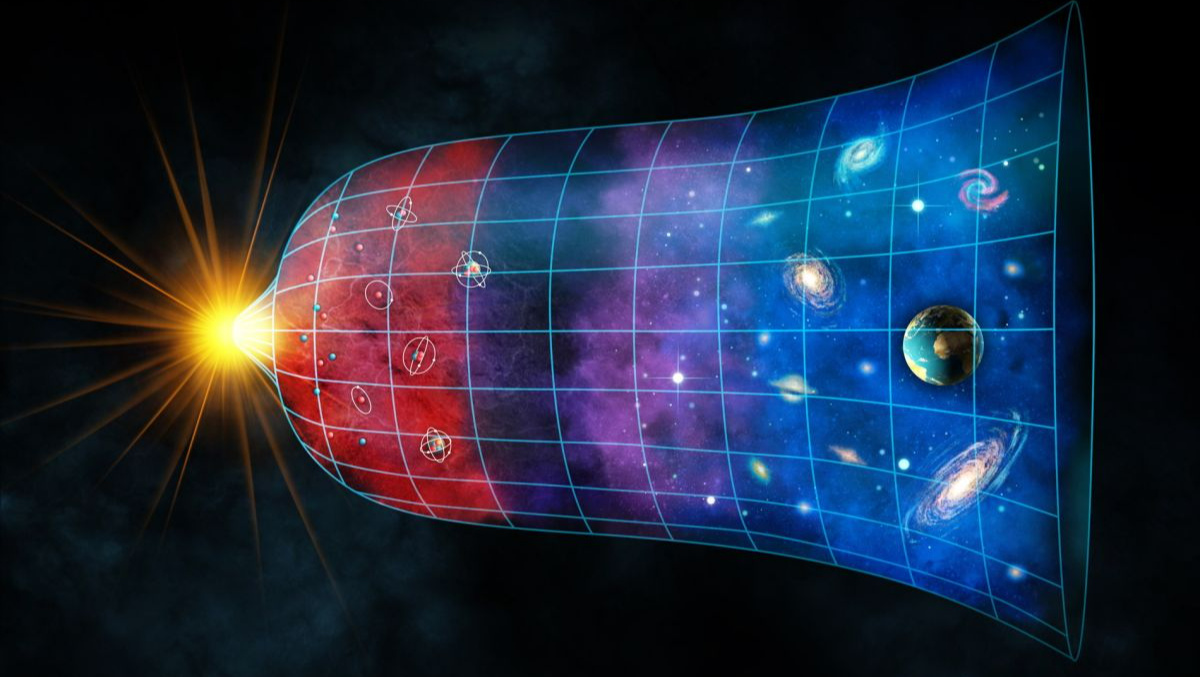
The imagery showing filaments connecting galaxy clusters resembles the connectome of brains. Beyond this similarity, there is compelling evidence suggesting the universe might be a single, large, living intelligence. Numerous scientists propose that the universe could be a giant neural network, a 'living' entity capable of learning and evolving. This idea challenges the traditional view of the universe as a vast, static expanse of space governed by the physical and quantum laws of energy and matter in a chaotic dance. The theory could potentially reconcile Einstein's relativity with quantum mechanics, often considered the holy grail of modern physics.
Neuroscientist Bobby Azarian extensively analyzes this radical theory, which was initially proposed by theoretical physicist and cosmologist Vitaly Vanchurin. However, its roots trace back to the pre-Socratic philosopher Anaxagoras, who lived from 500 to 428 BCE and formulated the concept of a universe that behaves like a human brain.
Just as terrestrial organisms are complex macro structures composed of microstructures—chemical compounds, molecules, atoms, and fundamental particles—the universe might follow a similar path, culminating in a neural network with the ability to learn and evolve. This does not imply that the universe is self-aware on a macro level. We do not know this yet, but we can certainly affirm that some elements of the universe are aware of its existence, similar to humans.
What Does the Theory Say?
The theory argues that the universe could be a neural network, a system of interconnected nodes similar to the neural networks in the human brain. According to Vanchurin, "the dynamics of the universe are governed by quantum mechanics and gravity theory, laws that are very similar to those governing neural networks." If the universe is considered a neural network, general relativity, which explains gravity on a large scale, and quantum mechanics, which describes the behavior of particles on a subatomic scale, could be perfectly compatible within neural networks.
However, information cannot travel faster than light, so the idea that these nodes behave like the neurons and synapses in the brain's connective structure seems impossible. But Hossenfelder adds that this changes when we consider our observations of quantum mechanics and particle entanglement. She suggests that this could be a method for instantaneous information transfer between nodes in the cosmos. "Quantum physics tells us that reality is not as solid as it seems," Hossenfelder notes, adding that particles can exist in several places simultaneously and change each other instantly.
This implies that the universe might behave like an 'organism,' acting as a cosmic computer capable of transmitting information, learning, and evolving. These statements can also be related to recent observations and theories discussing quantum foam as the fundamental fabric of the universe, suggesting that everything that exists is merely manifestations of a quantum whole that is the universe.
Surprising Evidence and New Questions
As Azarian points out, there is more empirical evidence that is, to say the least, perplexing. A study published in Science explains how the jets of particles and radiation emitted by black holes align inexplicably with the cosmic web. According to the journal, "the alignment of the jets indicates that the black holes feeding the quasars have mysteriously the same spin axis as their neighbors, despite being billions of light-years apart."
Fascinating New Questions
The theory becomes even more intriguing as it raises new questions for which we currently have no answers. How does the universe learn and evolve? How did this cosmic neural network form? And as part of this universe, what does it mean for us to theoretically be part of a living and thinking entity on a cosmic scale?
However, as Carl Sagan said, extraordinary claims require extraordinary evidence. For now, these are all fascinating and conceptually satisfying theories. And to continue with Sagan, it's a perfect demonstration of one of his most famous quotes: "We are a way for the cosmos to know itself."


Comments
Post a Comment