Simulation Theory: Is Reality Still Real?
Are We Living Inside a Computer?
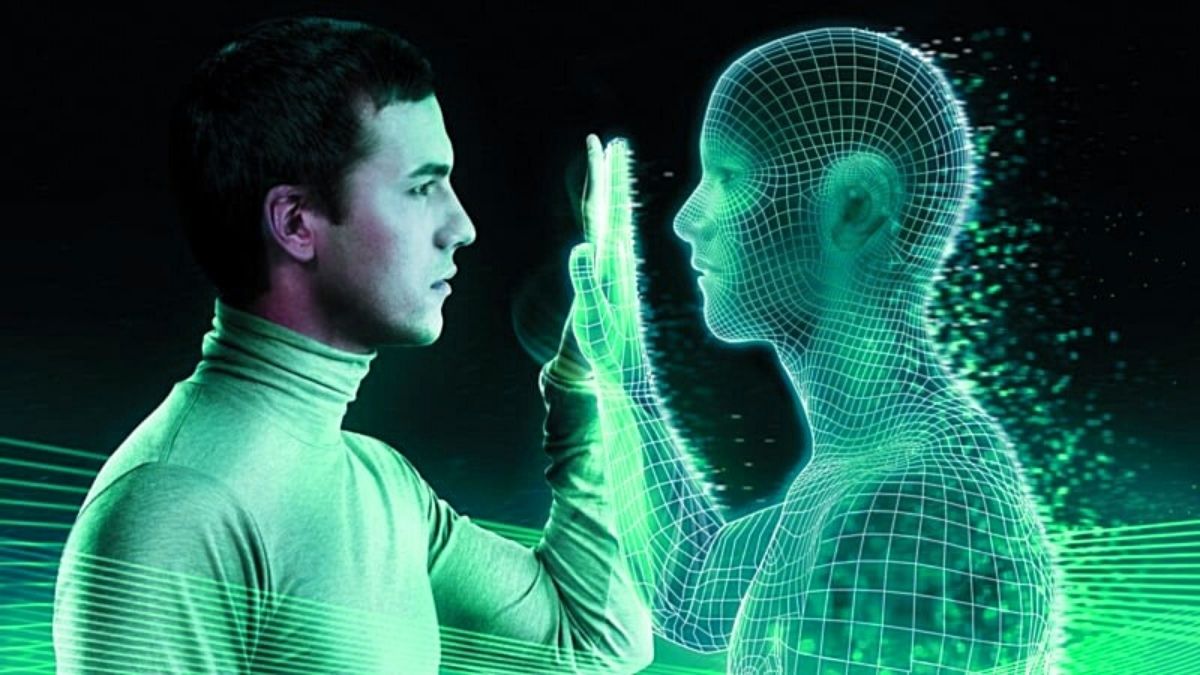
Simulation theory has become a hot topic in both the scientific and philosophical worlds in recent years. According to this theory, the universe and everything within it might actually be a computer simulation created by a highly advanced civilization. In other words, everything we see and experience might be nothing more than a simulated environment. But is this even possible, or is it just the plot of a science fiction movie?
The Basics of Simulation
The foundations of simulation theory are rooted in the work of philosopher and scientist Nick Bostrom. Bostrom suggests that, as technology and computer science continue to advance, a highly developed civilization might have the capacity to create simulations of past civilizations. According to Bostrom, if a civilization reaches a high level of technological progress, it could run millions of simulations. In that case, we could be living in one of these simulations rather than in a "real" universe. If the number of simulations exceeds the number of actual universes, the odds of us being in a simulation are quite high.
Reality, Simulation, and Quantum Physics
Proponents of simulation theory also point to the mathematical structure of the universe, which resembles the idea of a simulation. Quantum mechanics, with its uncertainty principle and the behavior of particles, provides further support for this idea. According to quantum mechanics, particles exist in a state of probability until they are observed, at which point they "collapse" into a definite state. This behavior is reminiscent of how a simulation might function, where the state of reality is rendered only when observed. If we are in a simulation, just like quantum particles, our experiences and perceptions could be shaped by the data provided by the simulation.
The Reality of the Simulation Experience
If we are indeed living in a simulation, we must accept that everything we experience within the simulation feels "real" to us. Pain, joy, fear, and other emotions could be nothing more than data points within the simulation. However, to us, they are very real emotions and experiences. In other words, the "reality" of what we feel and perceive is just as valid as if we were living in a non-simulated universe. The experience of being in a simulation doesn't lessen the reality of our feelings. The reality of the simulation is still real to us, regardless of its origin.
Philosophical and Scientific Implications
Simulation theory is not only a scientific question but also a profound philosophical discussion. Concepts such as reality, free will, and consciousness can be reexamined in light of this theory. If we are living in a simulation, does our free will still hold true? Are our conscious experiences simply the result of the rules of the simulation? Accepting the reality of a simulation could lead to new questions about the nature of existence and the limits of human perception. Perhaps, in a simulated world, "reality" is simply what we perceive, and we create a meaningful world based on those perceptions.
Conclusion: Is Reality Always Real?
Simulation theory, whether true or not, has the power to reshape our understanding of reality. If we are living in a simulation, everything within it is real to us because our perceptions and experiences are shaped by it. Reality is not just determined by what we observe but also by how we experience it. As beings born into a simulation, perhaps "reality" is only what we make of it through our perceptions, and even if it's a simulation, it is still real to us in every sense.
References
- Bostrom, N. (2003). Are you living in a computer simulation? Philosophical Quarterly, 53(211), 243-255. https://doi.org/10.1111/1467-9213.00309
- Bostrom, N. (2003, July 12). Are you living in a computer simulation? The Simulation Argument. https://www.simulation-argument.com/
- Tegmark, M. (2007). The Mathematical Universe. Foundations of Physics, 39(10), 1545-1584. https://doi.org/10.1007/s10701-008-9246-3


Comments
Post a Comment